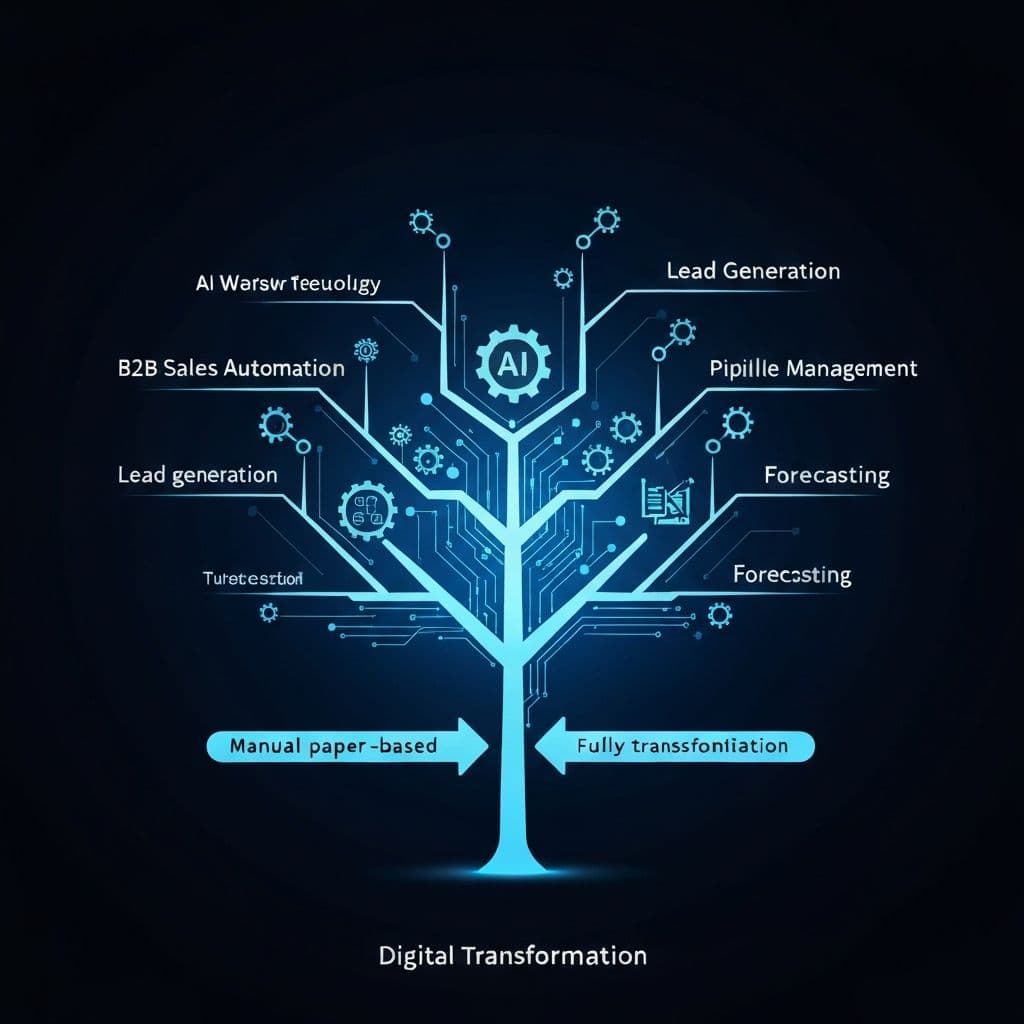
B2B Sales Automation with AI Agents
Mubarak Ahmad
Author
January 6, 2026
Published
B2B sales teams often coordinate long buying cycles, multiple stakeholders, and detailed CRM histories. AI agents can support narrowly scoped tasks such as capturing enquiry details, drafting follow-ups, and keeping records synchronized—but they need approved data, human review, and clear escalation rules.
The B2B Sales Challenge
B2B deals have longer cycles (3-12 months), multiple stakeholders, and complex requirements. Your sales team currently:
A pilot can compare response time, record completeness, follow-up completion, and staff review effort with your existing process.
How AI Sales Agents Work
Intelligent Lead Qualification
Use defined company attributes, stated needs, and CRM data to organize incoming leads for human review. A score is not a guarantee of buying intent.
Always-On Follow-ups
With an approved channel and response rules, an agent can capture enquiries outside office hours and route requests to staff for follow-up.
Deal-Specific Personalization
An agent can use approved account and industry context to draft relevant follow-ups. Review facts and tone before sending messages to prospects.
Measure a Pilot
Start with one team and one workflow. Track response time, record accuracy, follow-up completion, opt-outs, and staff review effort against a baseline before expanding.
Implementation Framework
Implementation Framework
The 5-Stage Deal Acceleration Process
Stage 1: Prospect Discovery
Use an approved data source to identify records matching defined account criteria, then route matches to a salesperson for review.
Stage 2: Intelligent Outreach
Draft first-contact messages from verified company context and have a person review the message before sending.
Stage 3: Objection Handling
Use approved content to draft answers; route commercial, legal, or technical exceptions to a person.
Stage 4: Deal Acceleration
Critical moments trigger human involvement for maximum closing power.
Stage 5: Post-Sale Onboarding
An agent can answer repeat onboarding questions from approved documentation and route account-specific issues to the team.
Pilot Metrics
Choose measures that match the workflow, such as response time, CRM data accuracy, completed handoffs, meeting quality, opt-outs, and staff review time. Compare results with a pre-pilot baseline and document any trade-offs.
Getting Started With AI Sales Agents
Start by choosing one repeatable sales task, confirming the data and permissions it requires, and deciding when a salesperson must review or take over. Expand only after the pilot is useful to both the team and its prospects.


Frequently Asked Questions
Continue Reading
AI Automation
E-Commerce Chatbots: Use Cases and What to Measure
Explore e-commerce chatbot use cases for product questions, order updates, and support, plus the metrics to check before launch.
AI Automation
AI Voice Agents for Customer Service: Use Cases and Limits
Explore voice agent workflows for inbound calls, appointment requests, order updates, and human handoff, with practical evaluation points.